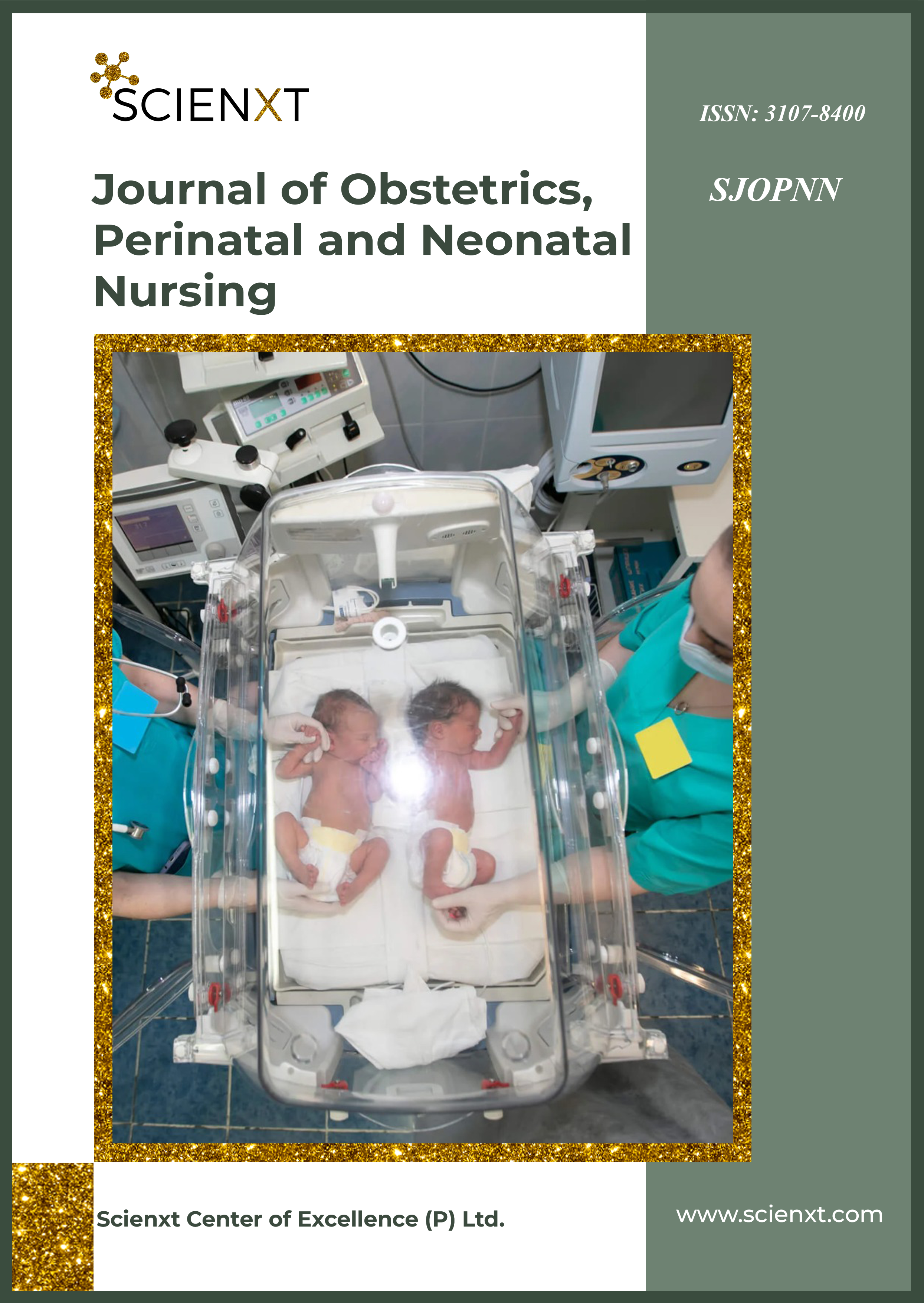
The effect of early skin-to-skin contact after caesarean section on breastfeedingduration and development of atopic-allergic diseases
Abstract
Caesarean section delivery rates have increased substantially worldwide over the last few decades, creating major implications for maternal and neonatal health outcomes. Mothers undergoing caesarean delivery frequently experience postoperative pain, delayed mobility, emotional stress, and delayed maternal-infant interaction, which may negatively influence breastfeeding initiation and continuation. Early skin-to-skin contact (SSC), defined as immediate or early placement of the naked newborn on the mother’s bare chest after birth, has emerged as a significant intervention for improving maternal and neonatal outcomes following cesarean section. Early SSC promotes physiological stability, enhances maternal bonding, supports successful breastfeeding, and may contribute to long-term immune benefits in infants. Breastfeeding is universally recognized as the optimal source of nutrition for infants and plays an important role in reducing infectious diseases, enhancing neurodevelopment, and strengthening immune protection. Studies by Moore et al. (2016), Victora et al. (2016), and Widström et al. (2019) demonstrated that SSC significantly improves breastfeeding initiation and duration after cesarean delivery. Furthermore, prolonged breastfeeding has been associated with reduced risk of atopic-allergic diseases such as eczema, asthma, allergic rhinitis, and food allergies (Lodge et al., 2015; Oddy et al., 2018). Early SSC also influences neonatal immune development by promoting colonization with beneficial maternal microbiota and reducing neonatal stress responses. Research by Horta et al. (2017) and Bäckhed et al. (2015) indicated that breastfeeding combined with SSC may positively modulate infant gut microbiota, thereby reducing inflammatory and allergic responses later in life. Psychological benefits including maternal confidence, reduced anxiety, improved attachment, and enhanced parenting behaviours have also been consistently reported (Bigelow et al., 2012; Crenshaw et al., 2019). The objective of this review article is to analyse available evidence regarding the effects of early SSC after cesarean section on breastfeeding duration and prevention of atopic-allergic diseases in infants. The review also explores physiological mechanisms, nursing interventions, maternal outcomes, neonatal immune development, and healthcare recommendations. The literature consistently demonstrates that early SSC is a safe, cost-effective, evidence-based intervention that improves breastfeeding outcomes, strengthens maternal-newborn bonding, and may reduce the risk of atopic-allergic disorders. Healthcare institutions should incorporate SSC into routine post-cesarean care protocols to optimize neonatal and maternal health outcomes.
Keywords:
Skin-to-skin contact, cesarean section, breastfeeding duration, atopic diseases, allergic disorders, neonatal immunity, maternal bonding, kangaroo care, infant health, neonatal nursingPublished
 Abstract Display: 14
  PDF Downloads: 31
 Issue
Section
Copyright (c) 2026 Scienxt Center of Excellence (P) Ltd

This work is licensed under a Creative Commons Attribution-NonCommercial-NoDerivatives 4.0 International License.