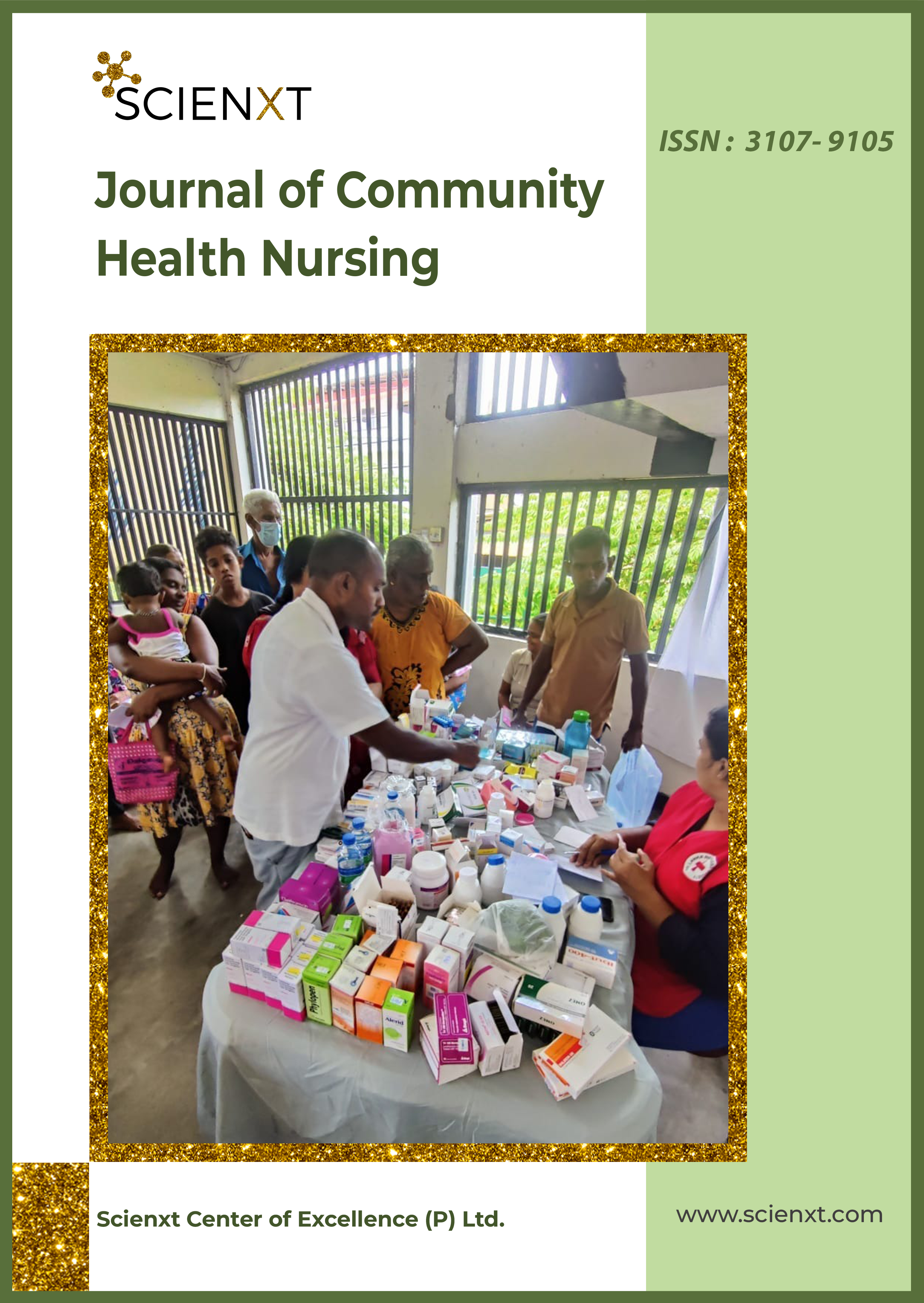
Effectiveness of nurse-led community care for hypertension and diabetes in underserved populations
Abstract
Hypertension and diabetes mellitus are major contributors to cardiovascular disease, kidney dysfunction, disability, and premature mortality, with a disproportionate burden among populations experiencing limited access to continuous and affordable healthcare. In underserved communities, shortages of healthcare professionals, fragmented services, socioeconomic constraints, and barriers to long-term follow-up frequently contribute to delayed diagnosis and inadequate disease control. Nurse-led community care has emerged as a promising approach to addressing these gaps by extending chronic disease management beyond conventional physiciancentered models. This review examines the effectiveness of nurse-led community-based interventions for the management of hypertension and diabetes, with particular emphasis on clinical outcomes, medication adherence, self-management, community engagement, healthcare utilization, and implementation challenges. Evidence indicates that nurse-led models incorporating systematic screening, regular clinical monitoring, protocol-guided care, patient education, lifestyle counseling, motivational support, and structured follow-up can improve blood pressure and glycemic control while strengthening medication adherence and self-management behaviors. Community-based delivery further enhances accessibility, continuity of care, cultural responsiveness, and patient engagement, particularly among populations facing geographic, financial, and social barriers to healthcare. These models may also contribute to reduced preventable hospital utilization and more efficient use of healthcare resources through early intervention and coordinated long-term management. However, successful implementation and scale-up depend on adequate workforce preparation, supportive scope-of-practice policies, sustainable financing, standardized clinical protocols, effective referral pathways, and integration with primary healthcare systems. Overall, nurse-led community care represents a potentially effective and equitable strategy for strengthening hypertension and diabetes management in underserved populations. Further high-quality, context-specific research is needed to determine long-term sustainability, cost-effectiveness, and the most effective models for implementation across diverse healthcare settings
Keywords:
Nurse-led care, Community-based care, Hypertension, Diabetes mellitus, Underserved populations, chronic disease management, Health equity, Primary healthcarePublished
 Abstract Display: 14
  PDF Downloads: 8
 Issue
Section
Copyright (c) 2026 Scienxt Center of Excellence (P) Ltd

This work is licensed under a Creative Commons Attribution-NonCommercial-NoDerivatives 4.0 International License.